Featured Project
Precision medicine: database of missense mutations in neuropsychiatric targets
Our lab has developed an AI-powered database designed to support basic and clinical scientists in understanding the molecular and genetic aspects of missense mutations in neuropsychiatric drug targets. The platform currently encompasses 5 neuropsychiatric disorders, 76 drug targets, 36,767 genetic variants, and 71 drugs.
MintDB integrates AlphaMissense pathogenicity predictions, ClinVar annotations, biobank coverage from the UK Biobank, and population frequency data from gnomAD. Users can explore comprehensive drug target profiles, protein domain structures, and disorder associations through interactive visualisations including lollipop plots, heatmaps, and 3D structure viewers.
An AI-powered query interface allows users to interrogate the database without requiring SQL expertise.
Visit MintDB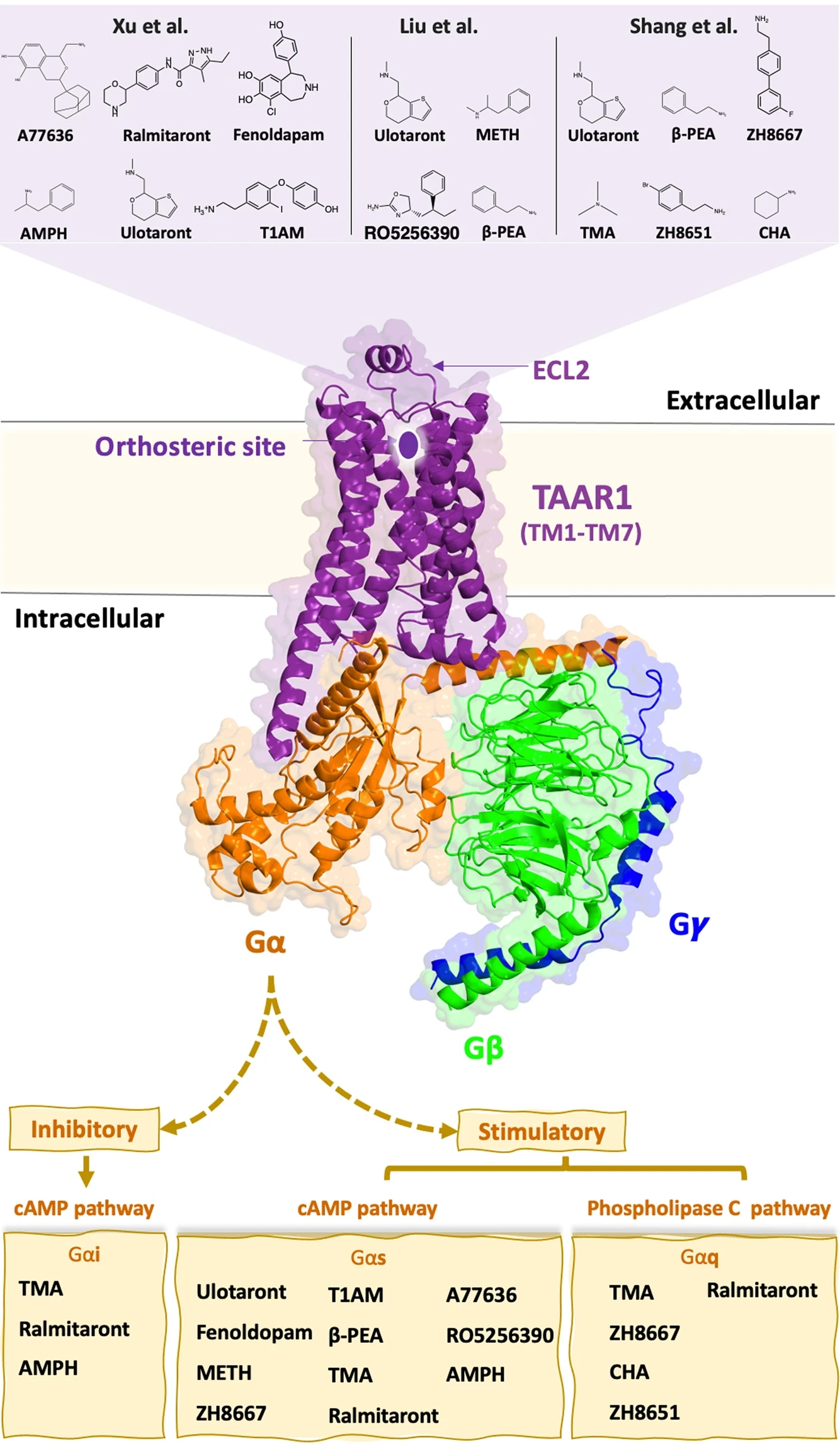
Featured Project
Investigating the pharmacology of TAAR1
Our lab has a strong research focus on the pharmacology of Trace Amine-Associated Receptor 1 (TAAR1), a novel G protein-coupled receptor (GPCR) and emerging therapeutic target in neuropsychiatric disorders including schizophrenia, depression, and bipolar disorder. Unlike conventional antipsychotic targets, TAAR1 operates independently of dopamine D2 receptor blockade, offering a fundamentally distinct mechanism of action. Our work explores the molecular and structural basis of TAAR1 activation, encompassing ligand binding interactions, binding pocket characterisation, and receptor-G protein coupling.
We have investigated the functional selectivity of TAAR1 signalling, including canonical Gs-mediated cAMP pathways and the recently identified Gq and Gi signalling mechanisms, which open new avenues for disorder-specific drug design. Our research aims to identify and characterise novel TAAR1 agonists with optimised signalling profiles for the treatment of neuropsychiatric conditions.
We have also researched the impact of genetic mutations on receptor function. Using various computational and experimental approaches, we revealed how the genetic mutation C182F results in a loss of function of the TAAR1 receptor.